Stress Urinary Incontinence
Home - Gynaecology - Stress Urinary Incontinence
Stress Urinary Incontinence
Stress urinary incontinence (SUI) is when you leak urine or wet yourself with activity. Women with this condition leak urine when they laugh, cough, sneeze, exercise or do anything that puts pressure on their bladder. This is caused by a weakness in structures that support the bladder neck and urethra, which means it cannot keep fully closed during exertion, allowing urine to escape. SUI is extremely common. Often called “light bladder leakage”, it can affect up to 1 in 3 women. Some women find it burdensome and embarrassing, resulting in a negative impact on their quality of life and preventing them from seeking medical help and the range of simple, effective treatments available.
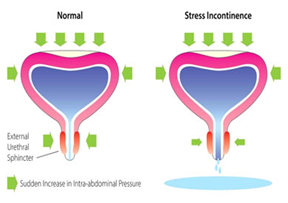
What causes SUI? We do not always know what causes SUI.
It is more likely if you:
- Are a woman. Men are much less likely to experience urinary incontinence and 10% of young women who have not had children will experience leakage especially during exercise and sport.
- Are pregnant. Many women experience urinary incontinence during pregnancy. If this happens to you, please tell your doctor or midwife. You are more likely to have ongoing urine leakage after the birth and as you get older and should see a continence physiotherapist for pelvic floor training during and after your pregnancy.
- Have had children. During pregnancy, the changes to your hormones and extra weight weaken your pelvic floor muscles (the hammock of muscles and tissue that lie across your pelvis and support your bladder).
- Have been through menopause. After menopause, your body makes less of the female hormone oestrogen that helps keep your pelvic floor strong.
- Suffer from constipation.
- Are over 65 years of age.
- Are overweight.
- Smoke or have a chronic cough.
How is SUI diagnosed?
Your doctor will ask you questions about your medical history, including childbirth and about activities, which cause leakage. You doctor would normally examine you and ask you to cough and tighten your pelvic floor muscles. You may be asked to keep a bladder diary, which involves recording how much you drink, how many times you pass urine and when you leak. They may recommend special bladder function (urodynamic) studies or an ultrasound scan to try to find the cause of your incontinence. All these tests will help the doctor diagnose the cause and determine the best treatment options for you.


What treatments are available?
All women should be recommended to consult a pelvic floor physiotherapist and/or continence nurse advisor as first line of treatment. Conservative treatment may include:
- General lifestyle changes. This may include maintaining a healthy weight, reducing / quitting smoking, avoiding constipation and aiming to drink enough to pass urine 4-6 times and a total volume about 1.5 litres per day.
- Physiotherapy to assist with pelvic floor exercises and bladder retraining. These exercises can be a very effective way of improving the symptoms of SUI. Up to 75% of women show improvement in leakage when this practice is carried out regularly over some period. Many women have difficulty performing these exercises correctly. Even if you have tried to do these exercises previously, it is worthwhile seeing a physiotherapist with a special interest in women’s health that will review your technique and offer advice.
- Continence devices. This device (vaginal pessary) fits inside your vagina to help control leakage. It may be inserted prior to exercise or worn continuously.
If these conservative treatments are not successful, surgery may be offered