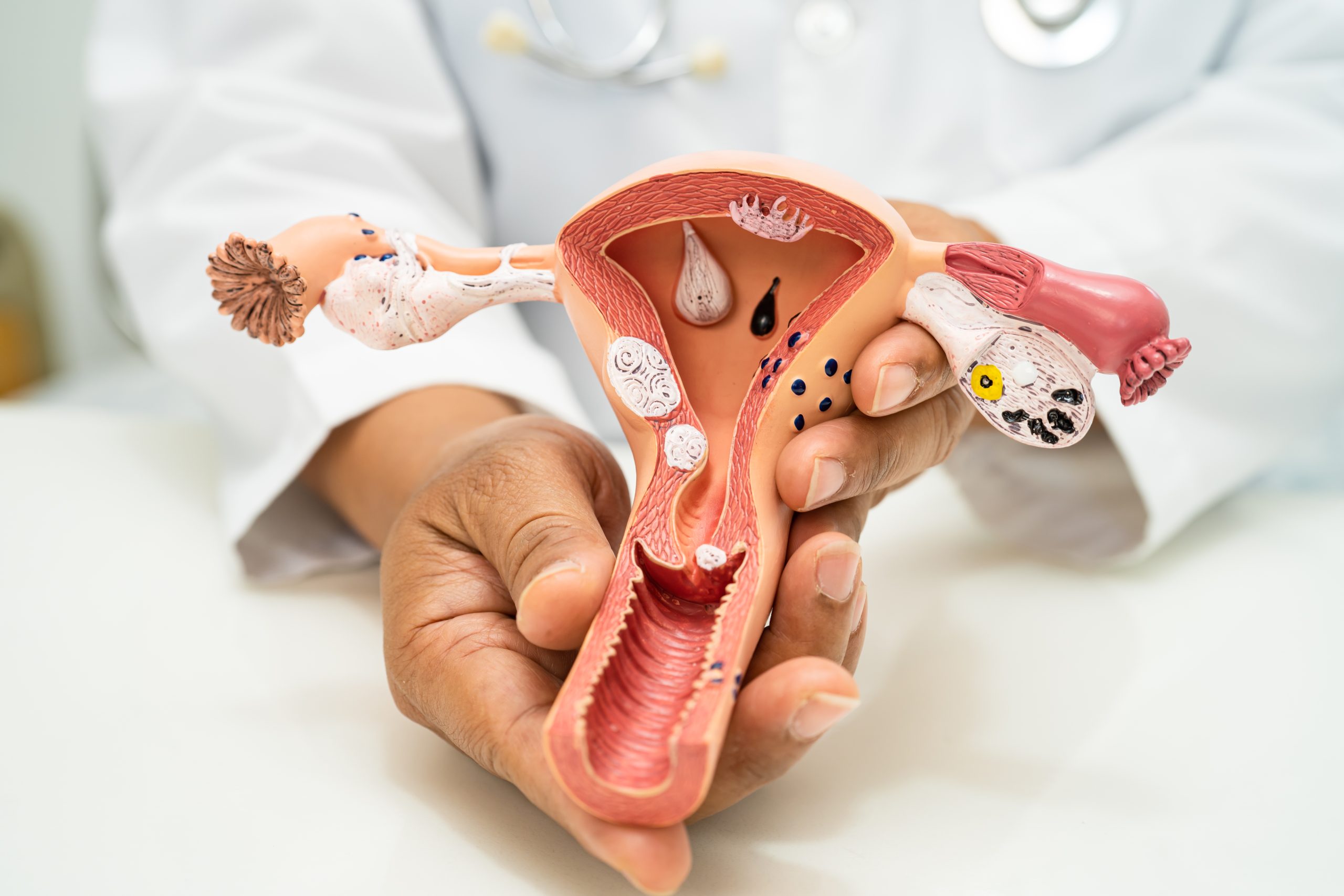
Abnormal Uterine Bleeding
Home - Gynaecology - Abnormal Uterine Bleeding
Abnormal Uterine bleeding
Abnormal uterine bleeding (AUB) is the term used to describe any symptomatic variation from normal menstruation in terms of regularity, frequency, volume, or duration. AUB also include
symptoms of heavy menstrual bleeding and inter-menstrual bleeding (IMB).
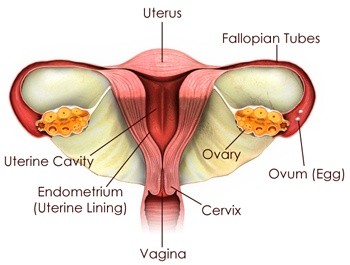
Symptoms of heavy menstrual bleeding may include:
- Soaking through one or more sanitary pads or tampons every hour for several hours in a row.
- Needing double sanitary protection to control your menstrual flow.
- Getting up at night to change sanitary pads or tampons.
- Bleeding for more than a week.
- Passing blood clots larger than a quarter.
- Limiting daily activities due to heavy menstrual flow.
- Feeling tired, fatigued or short of breath as the result of blood loss.
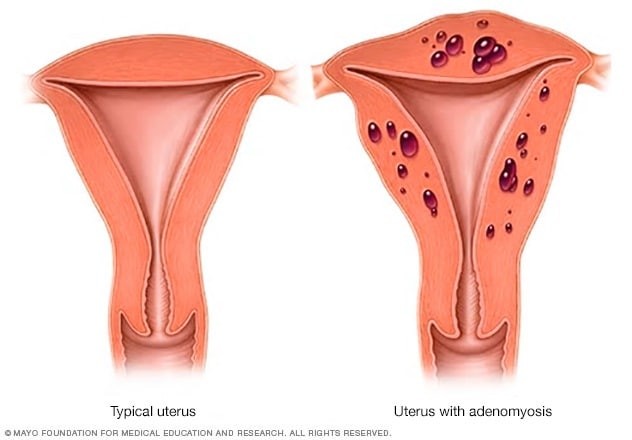
Adenomyosis Polyps
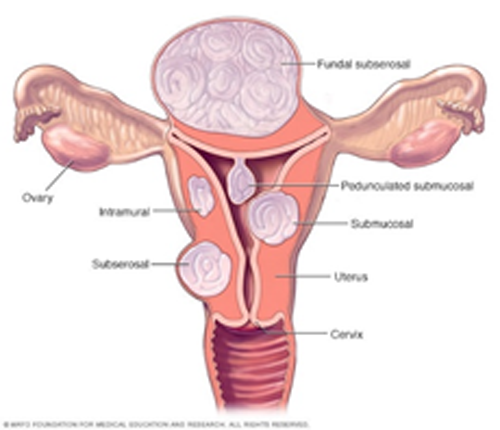
Fibroids
Causes of abnormal uterine bleeding
In some cases, the reason for heavy menstrual bleeding is unknown. But a number of conditions can cause heavy bleeding.
- Hormones being out of balance - A number of conditions can cause hormone imbalances. These include obesity, insulin resistance, thyroid problems and polycystic ovary syndrome, which also is called PCOS.
- Problems with the ovaries - Sometimes ovaries don't release an egg during a menstrual cycle. This also is known as anovulation. When this happens, the body doesn't make the hormone progesterone the way it usually does during a menstrual cycle. This leads to hormone imbalance and may result in heavy menstrual bleeding or unexpected bleeding between periods.
- Uterine fibroids - These tumors develop during childbearing years. They are benign, which means they are not cancerous. Uterine fibroids may cause heavier than normal menstrual bleeding or bleeding that goes on for a long time.
- Polyps - These small growths on the lining of the uterus may cause menstrual bleeding that is heavy or lasts for a long time. They may cause bleeding between periods. Polyps also can cause spotting or bleeding after menopause. The growths are not cancerous.
- Adenomyosis - In this condition, glands from the lining of the uterus grow into the wall of the uterus itself. This can cause heavy bleeding and painful periods.
- Intrauterine device, also called an IUD - Heavy menstrual bleeding is a well-known side effect of using a hormone-free IUD for birth control. Talk to your doctor about other birth control options. IUDs with progestin may ease heavy menstrual bleeding.
- Genetic bleeding disorders - Some bleeding disorders that run in families cause heavy menstrual bleeding. These include von Willebrand's disease, a condition in which the blood does not clot properly.
- Medicines - Some medicines can result in heavy or lengthy menstrual bleeding. These include hormonal medicines such as birth control pills that have estrogen and progestin. These medicines typically help lessen menstrual bleeding but sometimes cause unexpected bleeding between periods. Medicines that prevent blood clots also may cause heavy menstrual bleeding. They include warfarin (Jantoven), enoxaparin (Lovenox), apixaban (Eliquis) and rivaroxaban (Xarelto).
- Other medical conditions - A number of other medical conditions may cause heavy menstrual bleeding. They include liver, kidney and thyroid disease.
Treatment for abnormal uterine bleeding
- Non hormonal or hormonal management
- Optimising iron levels
- Minimally invasive surgical options such as endometrial ablation
- Surgery depending on the cause